
Consumer Behavior MBA Paper with Solution

Consumer behavior plays a major role in modern business decisions because it explains why people buy certain products and avoid others. MBA students study this topic to understand customer thinking, market trends, buying habits, and decision-making processes that help companies improve marketing strategies and increase customer satisfaction.
Consumer Behavior MBA Paper with Solution
Consumer behavior refers to the study of how individuals, groups, and organizations select, purchase, use, and dispose of goods and services. It focuses on customer needs, preferences, emotions, and attitudes that influence buying decisions. Businesses use consumer behavior knowledge to create effective products, pricing methods, advertisements, and customer experiences.
The concept of consumer behavior is important because customer choices directly affect company profits and market success. Every consumer has different motivations and expectations. Some customers purchase products because of quality, while others focus on price, brand image, convenience, or social influence. Understanding these factors helps organizations target customers more effectively.
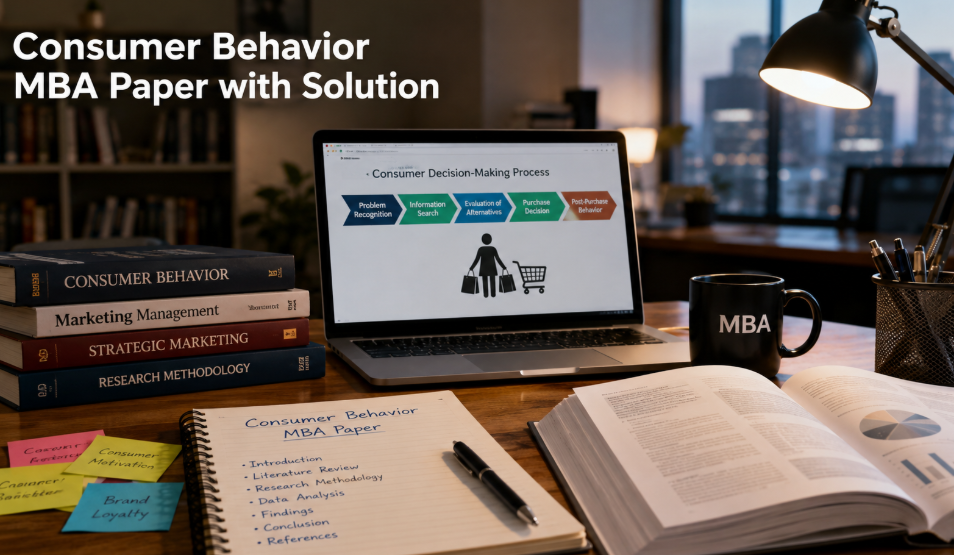
Consumer behavior can be divided into several stages. The first stage is need recognition. This happens when a customer realizes a need or problem. For example, a person may notice that their mobile phone is outdated and decide to buy a new one.
The second stage is information search. In this stage, customers collect information from advertisements, websites, social media, family members, and reviews. Customers compare different brands before making a final decision.
The third stage is evaluation of alternatives. Consumers compare available products based on features, price, quality, and benefits. A customer purchasing a laptop may compare battery life, storage, performance, and brand reputation before selecting the best option.
The fourth stage is the purchase decision. After evaluating options, the customer chooses a product and completes the purchase. However, external factors like discounts, peer opinions, or product availability can still influence the final decision.
The last stage is post-purchase behavior. After buying the product, customers evaluate whether the product met their expectations. Satisfaction leads to repeat purchases and brand loyalty, while dissatisfaction can result in complaints and negative reviews.
Several factors influence consumer behavior. These factors are divided into psychological, social, cultural, and personal influences.
Psychological factors include perception, learning, beliefs, attitudes, and motivation. Motivation encourages consumers to fulfill their needs. For example, people buy luxury products to achieve status and confidence.
Social factors include family, friends, colleagues, and social groups. People often purchase products recommended by people around them. Social media influencers also strongly affect modern consumer behavior.
Cultural factors include traditions, values, religion, and lifestyle. Different cultures have different buying patterns. For example, food preferences vary widely between countries and communities.
Personal factors include age, occupation, income, personality, and lifestyle. Young consumers may prefer trendy products, while older consumers may focus more on durability and comfort.
Businesses use consumer behavior research to improve marketing strategies. Companies collect customer data through surveys, online reviews, interviews, and purchasing records. This information helps businesses understand market demand and customer expectations.
For example, companies like online shopping platforms study customer browsing history and recommend products based on past searches. Fast-food brands also analyze customer preferences to create new menu items and promotional offers.
Digital marketing has changed consumer behavior significantly. Customers now rely heavily on online reviews, influencer marketing, and social media advertisements. Many consumers compare products online before visiting stores. Mobile applications and e-commerce platforms have also made purchasing easier and faster.
Customer satisfaction is another important aspect of consumer behavior. Satisfied customers become loyal customers and recommend products to others. Therefore, companies focus on product quality, customer service, and after-sales support to maintain positive relationships with consumers.
Ethical consumer behavior is also becoming more common. Many consumers prefer environmentally friendly and socially responsible brands. Businesses now focus on sustainable production, recyclable packaging, and ethical sourcing to attract conscious customers.
In conclusion, consumer behavior is a vital subject for MBA students because it explains customer purchasing decisions and market trends. Understanding consumer behavior allows businesses to improve marketing strategies, build customer loyalty, and increase profitability. Companies that understand customer needs can achieve long-term success in competitive markets.
Importance of Consumer Behavior in Business
Consumer behavior helps businesses identify customer needs and market demand. Companies can design better products and services by understanding customer preferences. It also helps businesses create targeted advertisements and effective pricing strategies.
Organizations use consumer behavior analysis to increase customer satisfaction and improve brand loyalty. Businesses that understand their customers can compete more successfully in local and international markets.
Types of Consumer Buying Behavior
Complex Buying Behavior
Complex buying behavior occurs when customers purchase expensive or high-risk products like cars, houses, or electronics. Consumers spend more time researching and comparing alternatives before making decisions.
Habitual Buying Behavior
Habitual buying behavior happens when customers repeatedly purchase the same product without much thinking. Everyday items like toothpaste, soap, and snacks often involve habitual buying patterns.
Variety-Seeking Buying Behavior
Some consumers like trying new products for excitement and change. Customers may switch brands frequently even when they are satisfied with their current product.
Dissonance-Reducing Buying Behavior
This behavior occurs when consumers purchase expensive products with little difference between brands. Customers may later seek reassurance that they made the right choice.
Role of Technology in Consumer Behavior
Technology has transformed how consumers search for information and purchase products. Online shopping websites, social media platforms, and mobile applications provide customers with instant access to products and reviews.
Artificial intelligence and personalized recommendations also influence buying decisions. Companies use customer data to offer customized advertisements and shopping experiences that increase sales and engagement.
Consumer Behavior and Marketing Strategies
Marketing strategies are closely connected to consumer behavior. Businesses create campaigns based on customer interests, demographics, and purchasing habits.
Companies use emotional advertising, discounts, loyalty programs, and influencer partnerships to attract customers. Understanding customer emotions and preferences helps marketers build stronger connections with target audiences.
Challenges in Understanding Consumer Behavior
Consumer preferences change rapidly due to trends, technology, and economic conditions. Businesses may struggle to predict customer needs accurately.
Globalization also creates challenges because companies must understand diverse cultural and social factors across different countries and markets.
Frequently Asked Questions
Why is consumer behavior important for MBA students?
It helps MBA students understand customer decisions and improve business strategies.
How does social media affect consumer behavior?
Social media influences customer opinions, purchasing decisions, and brand awareness.
What is the main goal of studying consumer behavior?
The main goal is to understand why customers buy products and services.
Can consumer behavior change over time?
Yes, customer behavior changes because of trends, technology, and lifestyle shifts.
How do companies collect consumer behavior data?
Companies use surveys, online analytics, customer feedback, and market research methods.
Final Verdict
Consumer behavior remains one of the most valuable areas of study in business education because it connects customer psychology with marketing success. MBA students who understand buying patterns, customer expectations, and market influences can make smarter business decisions. Strong consumer knowledge helps companies build trust, improve customer relationships, and achieve long-term growth in highly competitive industries.